 Spanish
 English
 Italian
 Portuguese
 French
Welcome to Our Blog - Selecting Heald Frames for High-Performance Weaving
Selecting Heald Frames for High-Performance Weaving
- Textile industry
- Feb 17, 2026
Selecting Heald Frames for High-Performance Weaving
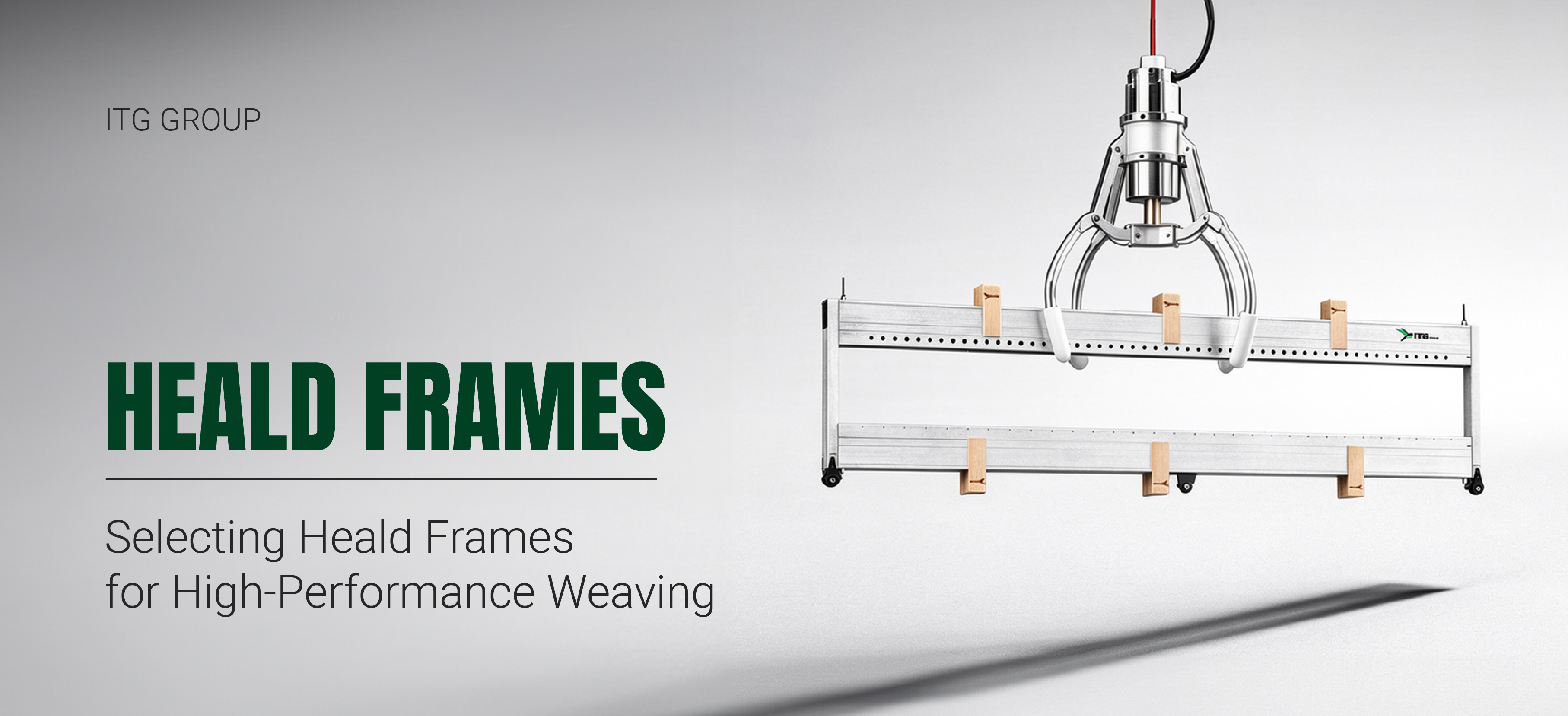
When investing in weaving equipment, heald frames are often underestimated. However, experienced textile professionals know that the performance, stability, and longevity of a loom depend heavily on the quality of its frames. Choosing the right heald frames is not just a technical decision — it is a strategic one that directly affects fabric quality, machine efficiency, and operating costs.
One of the first factors to consider is material quality. Heald frames must withstand continuous motion, tension, and vibration, especially in modern high-speed looms. Frames made from high-grade aluminum alloys or reinforced materials offer the best balance between strength and weight. A lighter frame reduces inertia, allowing smoother movement and higher operating speeds, while sufficient rigidity prevents deformation over time.
Another critical aspect is dimensional accuracy and structural stability. Poorly manufactured frames can warp or lose alignment, leading to uneven shed formation. This results in fabric defects, increased yarn breakage, and unnecessary stress on other loom components. Precision manufacturing and strict tolerances ensure consistent performance, even under demanding weaving conditions.
Surface finish and assembly quality also play an important role. Smooth surfaces reduce friction and wear, especially where frames interact with healds and droppers. High-quality welding, fastening, and joint design prevent loosening or micro-vibrations that can compromise fabric consistency and machine reliability over long production runs.
Compatibility is another key consideration. Heald frames must be engineered to match the specific loom type — whether rapier, air-jet, or projectile — as well as the operating speed, fabric style, and tension requirements of each application. Proper compatibility ensures stable motion, accurate shedding, and reduced mechanical stress, allowing the loom to operate efficiently without unnecessary vibration, adjustments, or premature wear. Frames that are correctly matched to the loom and fabric perform more reliably and support consistent production over long runs.
Maintenance and service life should not be overlooked. Frames designed with durability in mind reduce the frequency of replacements and maintenance interventions. Over time, this translates into lower operating costs, fewer unplanned stoppages, and more stable production schedules — all essential for competitive textile manufacturing.
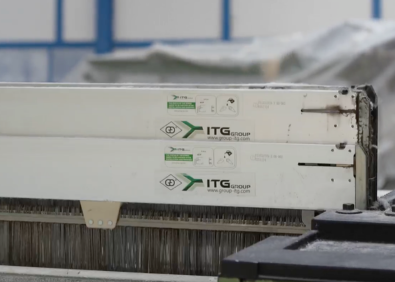
The qualities outlined above — material strength, structural stability, dimensional precision, compatibility, and long-term durability — are exactly the principles behind the heald frames offered by ITG Group. Designed to perform in modern, high-speed weaving environments, ITG frames are compatible with leading loom brands such as Toyota, Tsudakoma, and Picanol, meeting the expectations of experienced textile producers. By prioritizing reliability, stability, and precise manufacturing, ITG Group’s heald frame solutions support consistent fabric quality and dependable production, day after day.