 Spanish
 English
 Italian
 Portuguese
 French
Welcome to Our Blog - Heald Eyelets and the Hidden Cause of Lint
Heald Eyelets and the Hidden Cause of Lint
- Textile industry
- Jul 14, 2026
Heald Eyelets and the Hidden Cause of Lint
Every shedding cycle puts the warp yarn through the same point of contact: the heald eyelet. As the warp yarn bends at the eyelet during shedding, elongation occurs proportional to the square of the shed height — and because the front and back of the shed are asymmetrical in length, the yarn slips inside the eyelet, generating friction. When upper and lower yarns rise and fall alternately, severe friction occurs between them. During beating-up, the back-and-forth motion further increases friction between the warp yarn and the heddle eyelet.
This isn't an occasional event. It happens on every pick, on every heald, for the entire production run.
The cumulative cost of friction
The damage adds up in ways that show up directly on the production floor. Studies have found warp yarns lose up to 12% of their breaking tenacity due to abrasion and friction against fiber-to-fiber contact and all loom components — with peak friction occurring during weft insertion.
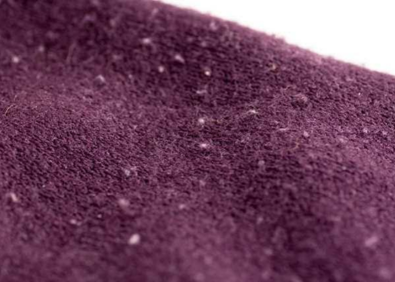
Lint is generated specifically at the points where warp yarns pass through drop wire eyes, heddle eyes, and between reed blades. This lint collects on the weaving machine surfaces and is often incorporated into the fabric when it falls into the shed or becomes entwined with warp or weft yarns, resulting in defective fabric. Thick lint buildup can also clog loom mechanisms and mix with lubricating oil.
The result is a chain of consequences mills know well: thin places, gouts, oily streaks, and broken ends — if the warp becomes too hairy, the reed forms a ball of fiber between the reed and heald shaft, and if small enough, that ball passes through and becomes a defect woven directly into the fabric.
Sizing helps — but it doesn't solve the problem at the source
Warp yarns are typically sized — coated with protective agents like starch or polyvinyl alcohol to improve abrasion resistance and reduce friction. This is a necessary step, but it addresses the yarn side of the equation. The eyelet itself — the physical surface the yarn contacts thousands of times per minute — is the other half of the equation, and it's often overlooked.
What eyelet geometry actually does
Heald design research is specific about which physical features reduce yarn damage at this contact point. Rounding the front and rear edges of the heald reduces stress on the yarn. A planar lateral surface at the eyelet — without sharp upper or lower corners — prevents the yarn from being forced onto edges where it could be wedged and damaged. This allows even thermally sensitive yarns to be processed at high operating speeds without damage from sharp edges or friction heat.
In other words: the smoother and more rounded the eyelet surface, the less mechanical stress the yarn absorbs on every single pass — which translates directly into less fiber shedding, less lint generation, and fewer downstream fabric defects.
Where ITG Group's healds and droppers fit?
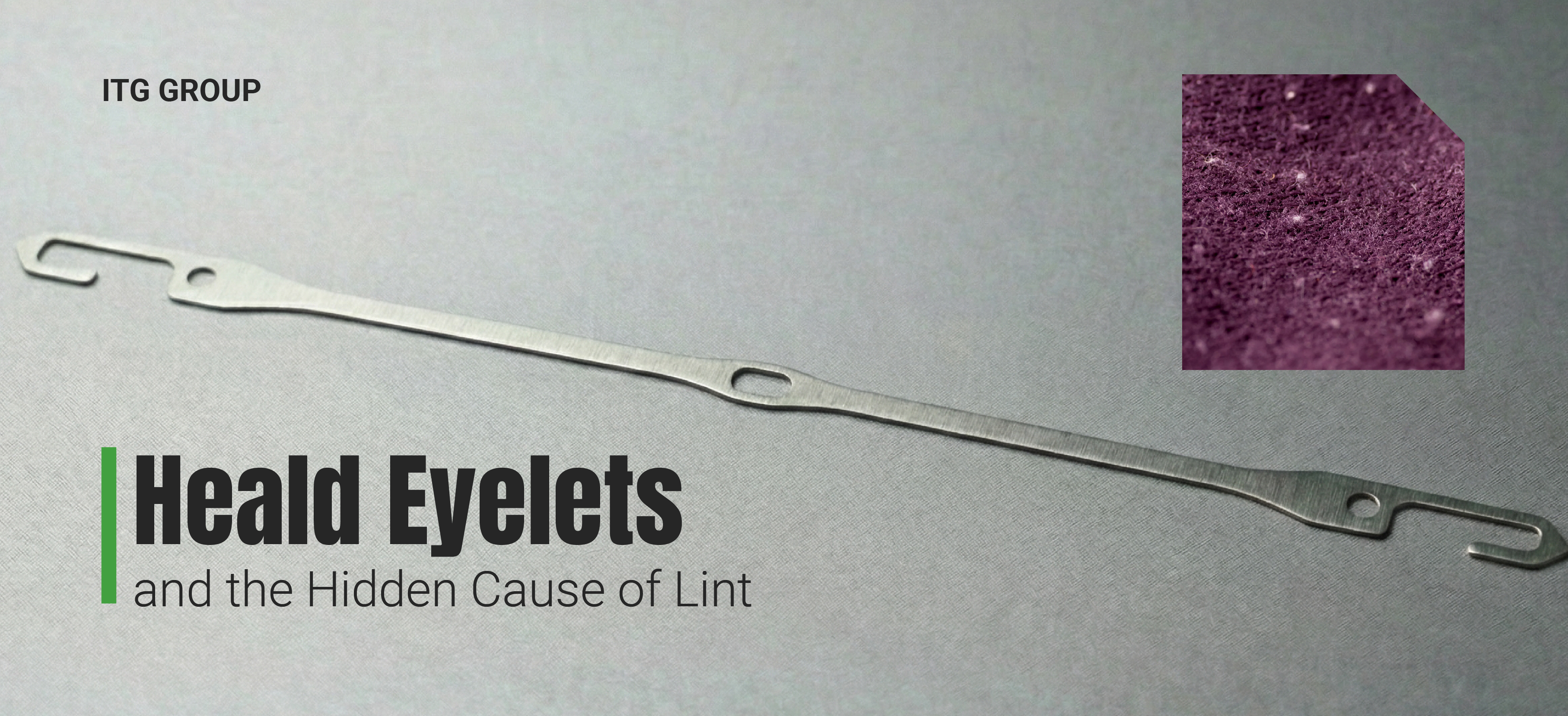
ITG Group's healds and droppers are manufactured with this contact point as a quality priority. Made from 420J stainless steel — a grade selected for its superior hardness and corrosion resistance — the eyelet surface is smooth and abrasion-resistant, and components are processed through acid-washing, polishing, and electrolysis to further improve anti-rust performance and reduce surface friction at the point of yarn contact. This combination of material and finishing directly addresses the root causes of lint buildup: rough contact surfaces that break fibers rather than guide them.
The full ITG Group range covers closed and open type flat steel healds, steel wire healds with grooved mail-eye, drop wires (EO and EG types across multiple sizes), and specialty healds for linen weaving and jacquard looms — giving mills the ability to match eyelet type and finish to the specific yarn and fabric they're running.
For mills dealing with recurring lint-related defects or accelerated yarn wear, the heald and dropper eyelet is often the first place worth inspecting — not just the yarn.
If you'd like to review which heald and dropper specifications best match your current loom setup and yarn type, ITG Group's technical team can help.
Sources: Statista, Grand View Research, Femme Hub, Mordor Intelligence, Oxano.